
How to Feed a Sourdough Starter
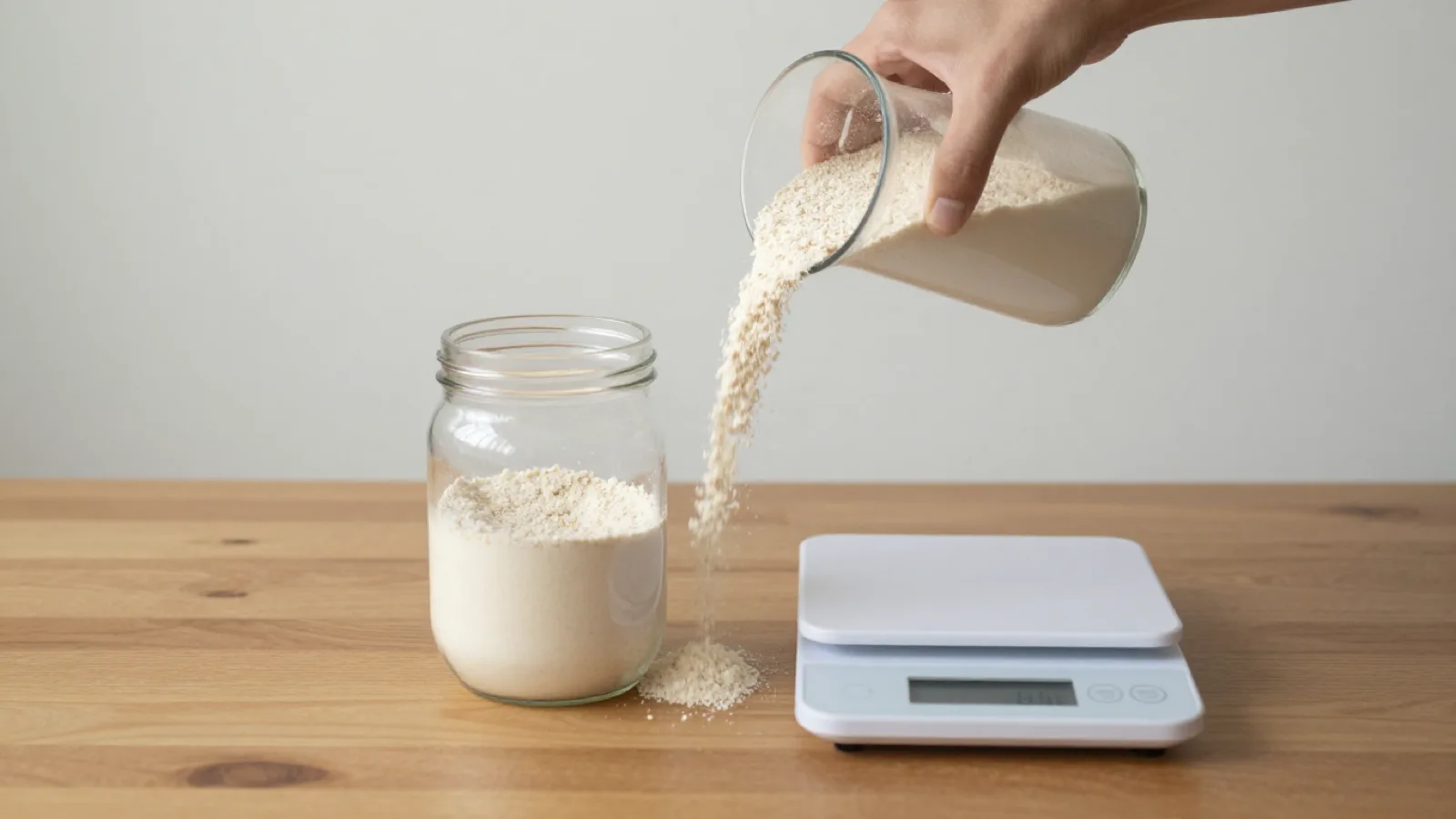
Feeding a starter is three things: throw most of it away, add flour and water, wait. The part people get wrong is usually the first one.
Weigh it, don't scoop it
A cup of flour can vary by 30% depending on how it's packed, and a starter fed by volume drifts thicker or thinner every single day until it stops behaving predictably. A $12 scale removes the entire problem. This is the one piece of equipment worth insisting on.
The ratio, and what it's for
Feedings are written as starter : flour : water by weight. A 1:1:1 feed means 50g of starter, 50g of flour, 50g of water — keep the rest for discard. That's a fast feed: lots of starter relative to food, so it peaks in four to six hours in a warm kitchen.
- 1:1:1 — peaks in about 4–6 hours. Use when you're baking today.
- 1:2:2 — peaks in about 8–12 hours. The usual once-a-day feed.
- 1:5:5 — peaks in roughly 12–24 hours. Good for overnight, or a warm kitchen in August.
More flour relative to starter means a SLOWER rise, not a faster one. It's the most counterintuitive part of this, and it's the lever you use to make a starter peak when you actually want it to.
Why you discard
If you never discarded, you'd be doubling the jar every day and feeding a kilogram of flour a week to keep it fed. You'd also be diluting the food less and less, so acid builds up and the yeast slows down. Discarding keeps the jar small and the acidity in check.
It does not have to go in the bin, though. Discard is perfectly good flour that's been fermenting, and it bakes into some of the best things in the kitchen.
Water temperature matters more than you'd think
Use lukewarm water, somewhere around 80°F. Cold water out of the tap in January can drop the whole jar ten degrees and add hours to the rise. Water hot enough to be uncomfortable on your wrist will kill the culture outright — that's the only genuinely destructive mistake on this page.
Once a day, or twice?
Once a day at room temperature is plenty for most people. Feed twice a day only in the few days before a bake, when you want the culture at its most vigorous, or if the jar is peaking and collapsing well before you get back to it.
If you bake weekly, keep it in the fridge and feed it once a week. Pull it out the day before you need it.
Reviving one you've forgotten about
A dark liquid on top — bakers call it hooch — means it's hungry, not ruined. Pour it off, discard all but a tablespoon, and feed it 1:2:2. Expect nothing on the first day. By the second or third feed it should be rising again.
Only pink or orange streaks, or actual fuzzy mould, mean starting over. Grey liquid and a sharp smell do not.
Once it's rising predictably again, you'll know it's ready by the same signs as always.