
How to Store Sourdough Bread So It Stays Good All Week
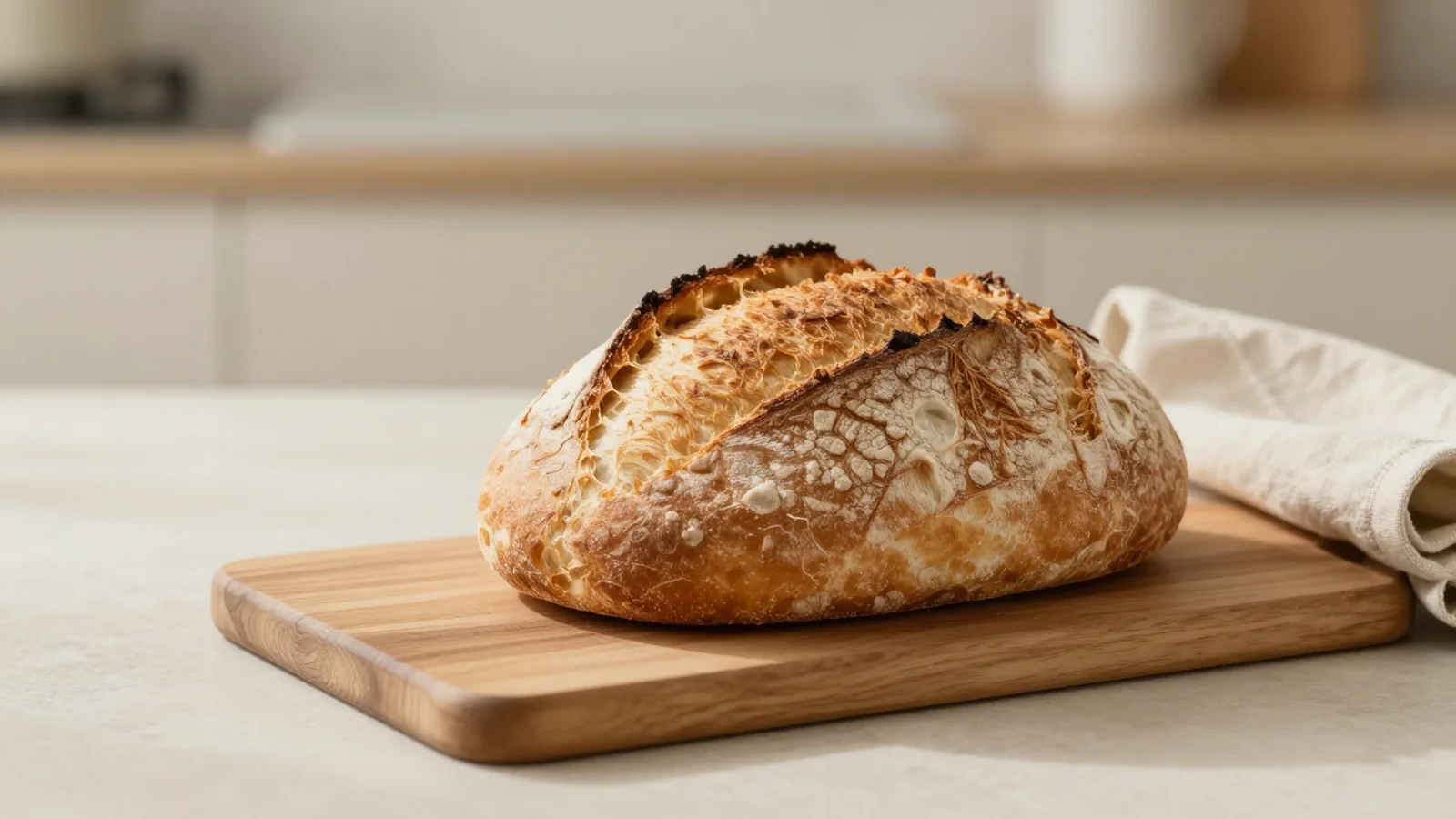
A real sourdough loaf is flour, water and salt. That's it — no preservatives, no dough conditioners, nothing engineered to keep it soft on a shelf for two weeks. It's the reason the bread tastes the way it does, and the reason storing it is a little different from storing a supermarket loaf.
Here's what actually works, in the order you'll need it.
Day one: leave it out, cut-side down
For the first day, the best storage is no storage. Leave the loaf on the counter, uncovered, cut-side down on a board. That crackling crust you paid for is a moisture barrier — sealing it in plastic while it's still fresh turns it soft and leathery within hours.
Days two to four: a bag, not plastic
Once the cut face starts to dry, move the loaf into a linen or paper bread bag. It slows moisture loss without trapping steam against the crust. A clean tea towel wrapped around it does the same job.
- Linen or cotton bread bag — best balance of crust and crumb
- Paper bag — good for a day or two, dries faster
- Plastic — keeps the crumb soft but kills the crust; fine if you're going to toast it anyway
The one that ruins a loaf: the refrigerator
Never refrigerate sourdough. Fridge temperatures are almost exactly the point at which starch retrogrades fastest — bread goes stale several times quicker in there than it does on the counter.
This is the single most common mistake, and it feels like it should help. It doesn't. If you can't finish the loaf in a few days, skip the fridge entirely and go straight to the freezer.
Beyond four days: slice, then freeze
Sourdough freezes beautifully — better than almost any other bread. Slice the whole loaf first, then freeze it in a sealed bag. You can pull out two slices at a time and toast them straight from frozen, no thawing. A loaf frozen the day it was baked and toasted three weeks later is still excellent.
To revive a whole frozen loaf, thaw it at room temperature still wrapped, then put it in a 375°F oven for about ten minutes. The crust comes back crisp.
What about the ends going hard?
That's normal and it's not waste. Hard heels are the best thing that ever happened to croutons, breadcrumbs, panzanella, or French toast. A stale slice is a different ingredient, not a failed one.