
Is Sourdough Bread Actually Healthier? An Honest Answer
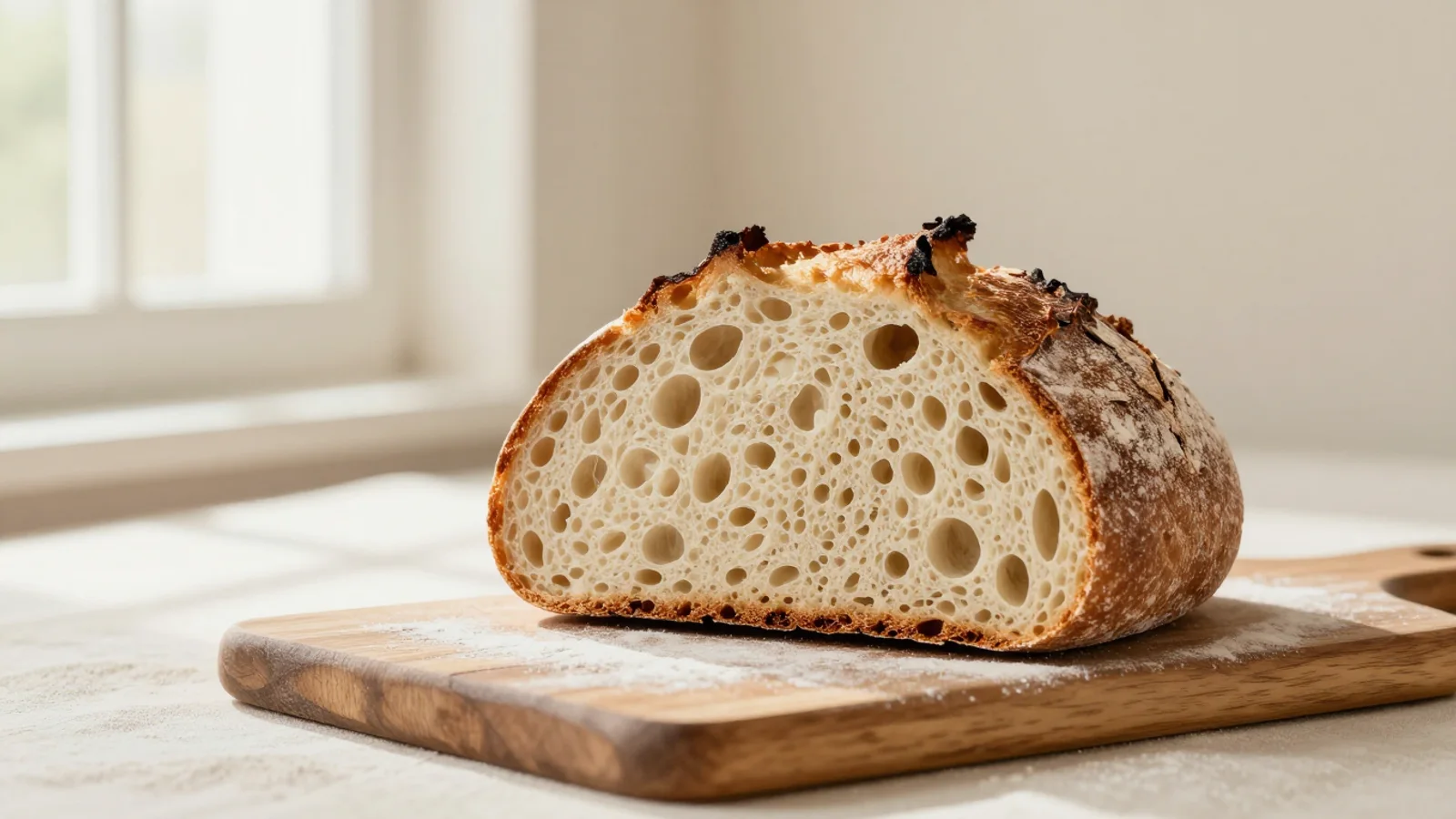
Sourdough has picked up a reputation as the healthy bread. Some of that is real and well-documented. Some of it is marketing that got repeated until it sounded like fact. As people who make the stuff for a living, here's the honest version.
What fermentation genuinely changes
Sourdough is leavened by a live culture of wild yeast and lactic acid bacteria rather than commercial yeast, and the dough ferments for many hours instead of one. That long fermentation does real work:
- It breaks down some of the phytic acid in flour, which otherwise binds minerals like iron, zinc and magnesium and makes them harder to absorb.
- It begins breaking down gluten proteins and starches — which is why many people find sourdough sits easier, even though it is emphatically not gluten-free.
- It produces organic acids that lower the bread's glycemic response compared with a standard white loaf.
What it doesn't do
Sourdough is not safe for celiac disease. Long fermentation reduces gluten, it does not eliminate it. If you have celiac, this bread is not for you — that's not a disclaimer, it's the truth.
It's also still bread. It's carbohydrate, it's calorie-dense, and a loaf made from white flour is still mostly refined flour no matter how long it fermented. Sourdough is a better version of bread, not a different food group.
The part most people miss: it depends on the baker
Most supermarket "sourdough" is regular yeasted bread with added acid or a little sourdough flavouring, proofed in a couple of hours. It gets the taste roughly right and none of the fermentation benefits, because none of the fermentation actually happened.
If the ingredient list has commercial yeast, vinegar, or anything you can't pronounce, the long ferment didn't happen. Real sourdough has a short ingredient list and a long clock.
How we do it
Every loaf we bake is naturally leavened with our own starter and cold-fermented overnight before it goes in the oven. Flour, water, salt, time. Our fresh-milled sandwich loaf goes a step further — the grain is milled right before it's mixed, so the germ and bran are still intact rather than stripped out months earlier.
That's the whole reason a loaf takes us two days and a factory twenty minutes.